Monday 24 / August / 2026
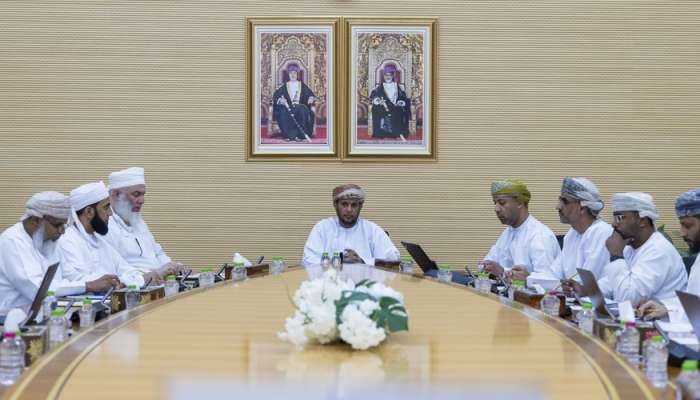
Muscat: The Sultanate of Oman's National Halal System Task Force convened for its third meeting to review progress on the development and launch of the integrated framework, a key initiative aimed at enhancing the global competitiveness of Omani products and ensuring their compliance with domestic and international market standards.
The meeting was chaired by Dr. Saleh bin Said Masan, Undersecretary of the Ministry of Commerce, Industry and Investment Promotion for Commerce and Industry.
Discussions focused on the significant growth of the global halal economy, now valued at over $7 trillion, with projections indicating it will reach approximately $10 trillion by 2030. This expansive market encompasses diverse sectors including halal food, personal care and cosmetics, halal tourism, Islamic finance, modest fashion, and pharmaceuticals.
The task force reviewed progress from the previous phase, which included the finalisation of the draft national Halal System regulations and the identification of the sectors to be governed by the framework. These are: cosmetics, overseen by the Ministry of Commerce, Industry and Investment Promotion; food and water, under the Ministry of Agriculture, Fisheries and Water Resources; and pharmaceuticals, supervised by the Ministry of Health.
The meeting addressed administrative, technical, and financial updates to the regulatory framework, including the approval process and proposed fee structures. The 'Oman Business Platform' was formally designated as the official portal for applications related to halal certification and the registration of certifying bodies.
To streamline market access, the task force reviewed a 'Fast Track' application mechanism set for implementation at the start of the coming year (2025). This system is designed to facilitate the entry of halal products into local and international markets, bolster consumer confidence, and support Omani exporters requiring halal certification.
The importance of Omani representation at relevant regional and international halal forums was emphasised, alongside plans for training and capacity-building for officials and auditors. Updates on the "Appointment Regulations" were discussed, including workshops held with public and private sector stakeholders, the ongoing finalisation of the draft, and key implementation challenges.
The meeting also considered Oman's potential membership in the Standards and Metrology Institute for the Islamic Countries (SMIIC) to benefit from expertise in standardisation, particularly for halal. Several proposals for a national halal logo were also reviewed.
the Undersecretary for Commerce and Industry underscored that unifying efforts and fostering public-private partnerships are fundamental to a successful national Halal System. He highlighted the importance of leveraging the experience of the Ministry of Endowments and Religious Affairs and affirmed the central role of the Office of the Grand Mufti as the definitive Sharia authority for interpreting halal requirements, ensuring the system's alignment with Oman's established religious principles and regulatory coherence.
He further stressed the necessity of establishing clear procedures for periodic Sharia compliance audits of certified products and services. This will be complemented by engaging technical experts to enhance supply chain oversight and verify product integrity, thereby ensuring ongoing adherence to both regulatory and religious standards.


