Saturday 19 / September / 2026
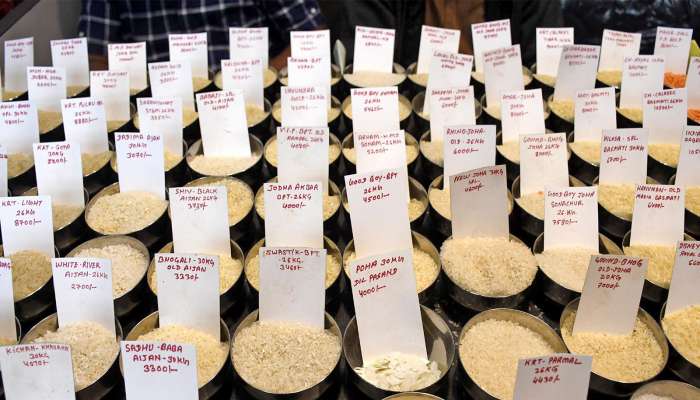
New Delhi: India has become the world's largest rice producer, beating China, with a total output of 150.18 million tonnes, Indian Agriculture Minister Shivraj Singh Chouhan said on Sunday, as he released unveiled 184 new varieties of 25 crops developed by the Indian Council of Agricultural Research.
On the occasion, Chouhan said,"Today, our scientists at ICAR, agricultural universities, and in the private sector have developed 184 new varieties of 25 crops, which were launched for farmers today. I am proud to say that in the last 10-11 years, under the leadership of the Prime Minister, more than 3200 new seed varieties have been developed. Seeds are the lifeblood of agriculture. Our effort is to ensure that these seeds reach the farmers as quickly as possible."
"I congratulate all those who have developed these excellent seeds. Our goal is to ensure that farmers get good quality seeds at the right price," he added.
Earlier, Chouhan said that this year's Rabi crops are witnessing a bumper harvest and expressed hope that farmers would be blessed with prosperity.
Addressing reporters at a gathering in Shirdi, he said the government remains committed to the welfare of farmers, the poor, and village development.
"This year's Rabi crops are having a bumper harvest, and we hope that God's blessings will be upon the farmers, bringing them great prosperity. May this year be one of welfare for the poor and development for the villages. The 'Viksit Bharat' and 'VB-G RAM G' scheme is capable and competent in achieving complete village development, and today I am going to participate in a program under this very scheme," Chouhan said.
He reiterated the government's focus on strengthening rural infrastructure, improving livelihoods, and ensuring inclusive growth across villages.
Yield success story
Addressing the event, Chouhan said the country has achieved great success in the development of high-yielding seeds.
Since the gazette notification process began in 1969, a total of 7,205 crop varieties have been notified, including rice, wheat, sorghum, maize, pulses, oilseeds, fiber crops, among others.
Post-2014 boost
Chouhan informed that 3,236 high-yielding varieties have been approved by the Narendra Modi-led government, as compared to 3,969 varieties notified between 1969 and 2014.
The minister noted that India has transformed from being a food-deficient country to becoming a global food provider.
Chouhan stated, "India has surpassed China in rice production and has become the world's largest producer." India's rice production has reached 150.18 million tonnes, compared to China's 145.28 million tonnes, he said, describing it as an unprecedented achievement.
India is now supplying rice in overseas markets, he said.
Chouhan said the country has abundant foodgrain stocks, thereby ensuring India's food security.
Elaborating on 184 advanced varieties released on Sunday, the minister said that farmers will be benefited as they will help in achieving higher yields and better quality of produce.
He emphasised the need to ensure that high-quality seeds reach every farmer's field.
Pulses, oilseeds focus
The minister also asked farm scientists to focus on increasing the production of pulses and oilseeds to make India self-sufficient.
Crop-wise breakup
Chouhan said that the country has entered a new era of agricultural revolution on the strength of the development of high-yielding and climate-resilient seeds.
The Union minister said that this achievement is the result of the collective efforts of the ICAR's All India Coordinated Projects on crops, state and central agricultural universities, and private seed companies.
The 184 recently released varieties include 122 cereals, 6 pulses, 13 oilseeds, 11 fodder crops, 6 sugarcane, 24 cotton (including 22 Bt cotton), and one each of jute and tobacco.
These varieties, which have been developed by ICAR institutes, state/central agricultural universities, and private seed companies, are climate-resilient, high-yielding, and resistant to major pests and diseases.
"These newly released varieties have been developed to address challenges such as climate change, soil salinity, drought, and other biotic and abiotic stresses, while also supporting natural and organic farming practices," the statement said.
Agriculture Secretary Devesh Chaturvedi noted that seed multiplication rates have been increased by 1.5 to 2 times to strengthen seed availability.
National and state seed corporations are ensuring quality seeds at affordable prices, he added.