Sunday 08 / February / 2026
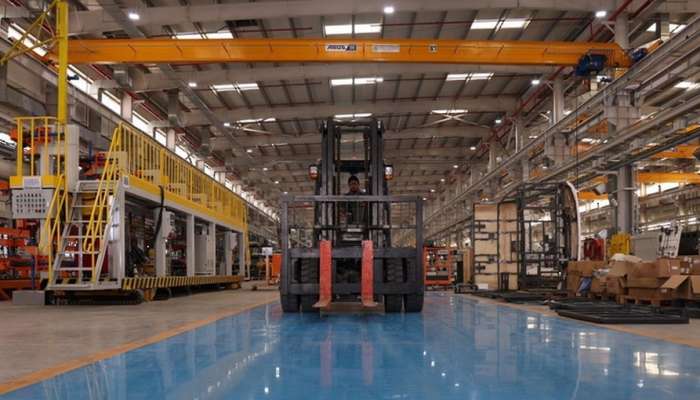
Muscat: Oman’s industrial sector continues to strengthen its role as a key engine of employment generation, with the workforce reaching 248,000 in 2025, marking a 3 percent increase over 2024 figures.
Projections indicate that the number of workers in the sector will rise further to around 277,000 by 2030, underscoring the sustained expansion of industrial activities and the sector’s growing capacity to support the national labour market.
The steady rise in industrial employment reflects the impact of the Industrial Strategy 2040, which prioritises technology-driven manufacturing, value addition, and the development of competitive industries capable of accessing regional and global markets.
The Sultanate of Oman will observe Oman Industry Day on Monday, an annual occasion held on the ninth of February.
This year's celebrations will be held under the theme "From Oman to the World: Competitive Industry, Global Vision," aimed at showcasing the competitive geographic and economic advantages of the nation's industrial zones and their vital role in advancing export performance.
The event further highlights the strategic efforts to provide the enablers, incentives, and facilitative measures that underpin the sustained expansion of the industrial sector.
Oman Industry Day serves as a distinguished platform to present the international achievements of Omani industrial exports, while encouraging national manufacturers to enhance product development and elevate quality standards to meet globally recognised specifications.
The occasion also focuses on attracting and stimulating export-oriented industrial investments and sharing the success narratives of Omani enterprises that have attained global market access and international competitiveness.
This year's commemoration reaffirms the central role of industrial exports in amplifying Oman's economic stature worldwide and underscores the quality and competitive strength of Omani products in regional and international arenas. Furthermore, it seeks to strengthen coordination and synergy among government bodies, manufacturers, and exporters to address prevailing challenges, refine export frameworks, and leverage the findings and recommendations from the 2025 Industry Day proceedings to shape future policies and initiatives.
These efforts align with the strategic aims of Oman Vision 2040 in fostering economic diversification and augmenting value addition.
The Ministry of Commerce, Industry and Investment Promotion will host the signature event, "From Oman to the World: Competitive Industry, Global Vision," on 15 February 2026, under the patronage of Abdulsalam bin Mohammed Al Murshidi, Chairman of Oman Investment Authority (OIA).
The Oman’s industrial sector continues to solidify its role as a cornerstone of the national economy, with industrial exports valued at approximately OMR1.618 billion in the first quarter of 2025—accounting for nearly 28 percent of total exports.
The sector has posted strong growth in key areas such as electrical equipment and metal products manufacturing. It contributes an estimated 9.5 percent to the nation's Gross Domestic Product, with non-oil industrial exports continuing an upward trajectory, reaching around OMR6.2 billion in 2024.
The Ministry further noted that by the close of 2025, the industrial sector had registered substantial milestones, demonstrating both its resilience and its expanding contribution to the national economy.
The manufacturing industries' share of GDP reached approximately OMR3.879 billion, marking a growth of 7.2 percent compared to the OMR3.620 billion recorded in 2024.
Foreign investment in the industrial sector also rose significantly to around OMR3.490 billion during 2025, reflecting a notable 24.6 percent increase from the approximately OMR2.800 billion registered in 2024.
This surge underscores growing investor confidence in the sector's prospects and its supportive investment climate.
The non-oil export sector achieved significant growth, reaching approximately OMR6.885 billion in 2025, marking a 10.5 percent increase from the OMR6.232 billion recorded in 2024.
This expansion underscores the growing international footprint of Omani-manufactured goods.
Employment within the industrial sector also rose to approximately 248,000 workers in 2025, reflecting a 3 percent increase from the 240,761 workers reported in 2024, thereby affirming the sector's vital role in generating domestic employment.
Furthermore, by the close of 2025, a total of 166 industrial establishments had obtained the National Product Identity designation, with 439 exemption requests approved.
These figures demonstrate the tangible impact of government incentives and facilitative measures in bolstering industrial operations and strengthening the competitiveness of locally produced goods.
Ghalib bin Said Al Maamari, Undersecretary of the Ministry of Commerce, Industry and Investment Promotion for Commerce and Industry, stated, "The industrial sector's performance in 2025 validates the success of government policies aimed at cultivating a robust industrial ecosystem and the efficacy of investor-focused incentives and facilities."
He emphasised that the concurrent growth in manufacturing output, foreign investment, and non-oil exports signals the sector's capacity to fulfill national economic diversification objectives.
In remarks to the Oman News Agency, he elaborated that the Ministry is committed to advancing the legislative and regulatory framework governing the industrial sector, streamlining administrative procedures, and deepening collaboration with the private sector.
These efforts are designed to elevate the global competitiveness of Omani products and attract high-value investments grounded in advanced technology and innovation, aligning with the overarching goals of Oman Vision 2040.
The industrial sector in the Sultanate of Oman continues to advance resolutely, reinforcing its status as a primary engine for economic diversification.
This progress is guided by the Industrial Strategy 2040, which aims to establish a modern, technology-driven manufacturing base, harness national creative talent, and integrate innovative production techniques to enhance the quality and competitiveness of Omani industrial products in local, regional, and global markets.
The strategy is founded on a clear vision underpinned by four strategic programs and targets five principal objectives: diversifying manufacturing into technology and knowledge-intensive activities; developing industrial products that improve public health and well-being; expanding the regional reach of Omani industry and facilitating entry into new international markets; upgrading manufacturing capabilities with cutting-edge technologies; and fostering a pervasive culture of industrial innovation.
Strategic focus is directed toward three high-potential industrial clusters: resource-based industries, capital-intensive industries, and knowledge-based industries. These encompass sectors such as oil refining, food processing, metals and mining, electrical and mechanical engineering, marine equipment, transportation, alongside emerging fields like solar panel manufacturing, hydrogen production, and recycling.
The implementation framework includes 90 strategic initiatives developed in partnership with 125 entities affiliated with the Ministry of Commerce, Industry and Investment Promotion and 140 strategic partners. Current progress metrics indicate 7 percent of initiatives have been completed, with a further 13 percent actively underway.
Data recorded from 2021 through 2024 affirms the sector's robust performance, with industrial production achieving significant growth. The sector's contribution to the Gross Domestic Product stood at 9.4 percent in 2024, an increase from 8.9 percent in 2020. Concurrently, foreign direct investment in the industrial sector reached OMR2.8 billion by the close of 2024.
Non-oil merchandise exports from the Sultanate of Oman grew by approximately 5.8 percent.
The contribution of the manufacturing sector at constant prices expanded from OMR2.81 billion in 2020 to exceed OMR3.62 billion in 2024.
Customs exemption approvals surged by 41.6 percent between 2020 and 2025. Furthermore, the growth rate for approved industrial licenses increased by 68.7 percent from 2020 to 2024.
Products certified with the National Product Identity emblem totalled 6,957, bolstering the market presence of Omani goods both domestically and internationally.
Labour market indicators reveal accelerated employment growth within the industrial sector.
The workforce expanded from 20,218 in 2020 to 240,761 in 2024, rising further to 248,000 in 2025. Projections estimate the workforce will reach approximately 277,000 by 2030, underscoring the sustained expansion of industrial activities and their enhanced capacity to generate employment and fortify the national labour market.
Oman's endeavours to cultivate its industrial sector have garnered extensive international and domestic recognition. The United Nations Industrial Development Organization (UNIDO) commended the sector's transformative shift, propelled by the rapid advancement of high-technology industries.
A World Bank report affirmed the industrial sector's central role in diversifying revenue streams and securing a current account surplus.
In a September 2025 report, Standard & Poor's noted that the manufacturing, services, and construction sectors constitute the principal engine of economic growth in Oman.
Similarly, the International Monetary Fund's 2025 report identified manufacturing as the foremost driver of non-oil economic expansion.
As part of ongoing efforts to streamline procedures and advance digital transformation, several key initiatives have been launched. These include the issuance of the National Product Identity via the "Made in Oman" platform, the integration of the Gulf Industrial Platform with the Industrial Observatory system, and the introduction of the Smart Production Factories project.
A streamlined mechanism for licensing Liquefied Petroleum Gas (cooking) stations was also implemented.
Additional milestones encompass the publication of the second edition of the Omani Products Directory, an increase in the rate of automated license issuance to 80 percent, and the signing of industrial cooperation agreements and memoranda of understanding with various international and regional organisations.
Strategic targets for the industrial sector under the Eleventh Five-Year Plan feature the execution of several specialised programs.
Chief among these is the Industrial and Technological Innovation Programme, which prioritizes the establishment of dedicated industrial technology centers, the strengthening of university-industry partnerships, support for innovation projects, and the encouragement of smart manufacturing adoption. The program also includes creating business incubators and accelerators and organizing industrial innovation competitions.
Further objectives are encapsulated in the Program for Empowering Omani Industries and Enhancing Their Efficiency. This initiative aims to operationalise the Industrial Observatory, improve energy efficiency in high-consumption factories, reduce the industrial carbon footprint, facilitate the adoption of Fourth Industrial Revolution technologies by national manufacturers, and promote the transition towards sustainable green industries. These measures are designed to elevate the competitiveness of Omani products in both domestic and regional markets.
The Industrial Sector Stimulation Programme has introduced a comprehensive suite of financial instruments, facilitative measures, and investment incentives.
These initiatives are complemented by dedicated export financing schemes, funding for renewable energy and advanced technology projects that boost energy efficiency, and the provision of pre-equipped industrial facilities to accelerate project implementation.
A core objective of the programme is to enhance value-addition within the manufacturing sector.
This is pursued through the development of robust value chains, the establishment of complementary industries, and the provision of targeted incentives designed to foster greater industrial integration. Additional support services are also being deployed to elevate production efficiency and increase local content.
Faisal bin Abdullah Al Rowas, Chairman of the Board of Directors of the Oman Chamber of Commerce and Industry (OCCI), remarked, "Oman Industry Day is a national milestone that underscores the industrial sector's elevated stature and its pivotal role in bolstering the national economy, advancing economic diversification, and laying the groundwork for sustainable growth and competitiveness."
He elaborated that this year’s theme signifies a strategic ambition to propel domestic industry onto broader regional and international stages by maximizing value addition, expanding productive capacity, attracting quality industrial investment, and increasing the sector's contribution to the Gross Domestic Product.
In a statement to the Oman News Agency, Al Rowas affirmed that the private sector stands as the principal partner in forging a robust and competitive industrial base.
He highlighted the Chamber's commitment to fostering a conducive industrial business climate, advocating for the interests of industrialists, contributing to the development of investment-friendly regulatory and legislative frameworks, and empowering small and medium enterprises to integrate into local and global supply and value chains.
He further noted that the Chamber is intensifying its efforts to amplify the global reach of Omani industries. This involves expanding international economic networks, coordinating overseas trade missions, and forging institutional alliances with global industrial leaders—all initiatives aimed at unlocking new markets for national products and strengthening their competitive edge.
He pointed to the necessity of embracing modern production paradigms driven by innovation, advanced technology, digital transformation, and environmental sustainability in response to worldwide industrial shifts. He reiterated the Chamber's dedication to ensuring the Omani industrial sector is fully prepared to navigate these evolving trends and bolster its long-term resilience and capacity for growth.
OCCI Chairman concluded by stating that Omani Industry Day exemplifies the growing confidence in the national industry's potential and represents a unified commitment from both the public and private sectors to advance Omani industry, secure its standing in international markets, and amplify its role in achieving comprehensive economic development.
Eng. Dawood bin Salim Al Haddabi, Chief Executive Officer of the Public Establishment for Industrial Estates "Madayn," stated that this year's Oman Industry Day coincides with Madayn's launch of an expansive five-year phased plan (2026-2030).
The plan is centered on key targets, including elevating the aggregate export value from Madayn's industrial cities from the current OMR3.79 billion annually to OMR4.3 billion by the conclusion of 2030.
This will be guided by an actionable implementation framework that aligns institutional programmes with executable projects and key performance indicators. The approach carefully considers existing institutional capacities, the prevailing legislative and regulatory environment, and long-term financial sustainability. It is founded upon a comprehensive analysis of developmental and operational gaps, a review of regional and international competitive challenges, and an assessment of Madayn's position within global industrial value chains.
This strategic focus ensures resources and programs are directed toward initiatives with the highest economic and developmental impact, yielding measurable outcomes in the coming period.
In a statement to the Oman News Agency, he elaborated that the plan will advance in parallel with the development of core infrastructure and services within both existing and new industrial cities.
It also encompasses attracting strategic industries, establishing specialised industrial zones, refining the investor journey and ease of doing business, accelerating digital transformation through the adoption of artificial intelligence, and bolstering projects related to environmental sustainability, energy efficiency, and renewable energy.
He further explained that the Omani Products Export Promotion Team (OPEX), which is chaired by Madayn, aims through its 2025-2026 plan to penetrate new, high-potential markets for Omani goods across several vital industrial sectors.
The objective is to forge new distribution channels for national products by diversifying marketing avenues and increasing export volumes. The initiative also supports Omani companies and small and medium enterprises in adopting novel approaches to trade, export, and targeted industrial activities.
This endeavour seeks to elevate Oman's profile on the global trade map, open new international markets for exporters, identify promising commercial opportunities, and secure trade agreements that bolster the growth of national exports.
Eng. Khalid bin Salim Al Qasabi, Director General of Industry at the Ministry of Commerce, Industry and Investment Promotion, affirmed that the industrial sector's robust performance in 2025 resulted from the synergistic implementation of programs and initiatives under the Industrial Strategy 2040.
He noted that the recorded indicators demonstrate tangible advancement in areas of production capacity expansion, export growth, investment stimulation, and job creation.
In remarks to the Oman News Agency, he added that the Directorate General of Industry is concentrated on empowering national factories to integrate modern technologies, accelerating the shift towards smart and green industries, and developing robust industrial value chains, alongside fostering industrial innovation.
These efforts are designed to enhance production efficiency, ensure sustainable growth, and strengthen the presence of Omani industries in regional and international markets.
He indicated that the Industrial Strategy targets raising the manufacturing sector's contribution to Gross Domestic Product from 5.25 percent to significantly higher levels, with an annual growth rate of up to 7 percent.
The strategic objectives aim to achieve specific contribution ratios of 9.54 percent, 14 percent, and 7.37 percent at various stages. Performance indicators for 2024 point toward reaching a 9.5 percent contribution, according to data from the National Centre for Statistics and Information (NCSI).
He further detailed that foreign direct investment in the industrial sector grew from RO 1.705 billion in 2021 to OMR2.8 billion in 2024, with projections set to reach OMR3.490 billion in 2025 and ultimately OMR8.490 billion by 2030.
He noted that the "Industrial Strategy 2040" targets a reduction in the share of government investments to 12 percent by 2040, while concurrently elevating foreign direct investment to 34 percent and domestic investment to 54 percent. This strategic shift is aligned with an objective to achieve a 39 percent increase in non-oil merchandise exports every five years, commencing in 2025.
Sheikh Dr. Hilal bin Abdullah Al Hinai, Chairman of the Oman Manufacturers Association, remarked that this year's Oman Industry Day slogan encapsulates the strategic trajectory of the national industry, marking a phase of qualitative transformation.
He described this as a shift from primarily serving the domestic market to competing effectively in regional and international arenas by enhancing the value-addition of national products, elevating quality standards, and embracing innovation and modern technology.
He reported that the manufacturing sector recorded an average real growth of approximately 6.6 percent between 2021 and 2024, underscoring the sector's resilience and its potential for sustained expansion. The value-added from manufacturing industries also rose to around OMR 3.6 billion in 2024, representing approximately 9.4 percent of the real Gross Domestic Product.
Among the notable achievements of Omani industry, he highlighted strategic diversification into multiple sectors, including food, chemical, and metal processing, alongside broader manufacturing. This has been coupled with continuous improvements in quality benchmarks and production efficiency, thereby strengthening the competitiveness of Omani goods in both domestic and international markets.
He also pointed to the increasing integration of national talent within the sector, estimating the current Omani workforce in industry to be between 35,000 and 40,000. This trend demonstrates the efficacy of nationalization policies and capacity-building initiatives, affirming the industrial sector's role in generating sustainable employment and augmenting the national workforce's contribution to the economy.
In a statement to the Oman News Agency, he emphasized the critical role of government facilitation in this progress. Support has been provided through an enabling regulatory framework, streamlined administrative procedures, targeted investment incentives, and the development of robust industrial infrastructure within specialized economic zones. These measures have collectively enhanced the sector's appeal to both domestic and international investors.
The Chairman of the Oman Manufacturers Association concluded by affirming that national industries have made significant strides in automating industrial processes and adopting digital transformation. These advancements are instrumental in boosting production efficiency, minimizing waste, increasing local content, integrating factories with suppliers via sophisticated digital platforms, optimizing supply chain visibility, and fostering data-driven decision-making.