Tuesday 17 / February / 2026
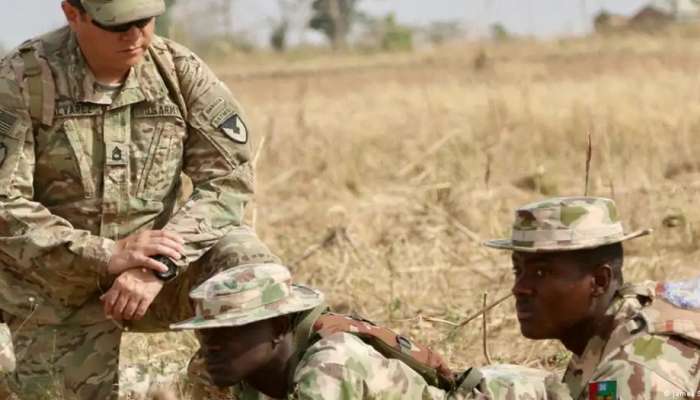
Abuja: The United States has sent 100 soldiers to Nigeria, with the hopes of helping the West African country defend itself from the threat of armed groups.
Nigeria's military announced the arrival of the toops, along with equipment, on Monday.
Nigeria has been plagued by violence, as its army is locked into a protracted fight with dozens of local armed groups, including extremists such as Boko Haram and its breakaway faction IS West Africa Province.
Among the groups are also the IS-linked Lakurawa, and other "bandit" groups, specialising in kidnapping for ransom and illegal mining.
In a statement, the military said the Nigerian government had made a request to the US for help with training, technical support and intelligence-sharing.
Samaila Uba, spokesperson for Nigeria's Defence Headquarters, said the US troops are there for training purposes and will not engage in combat or have a direct operational role.
Nigerian forces will maintain complete command authority.
The arrival of US forces follows criticism by the Trump administration over Nigeria's security situation. In December, US forces launched airstrikes on IS group-affiliated militants in the country's northwest.
How did Nigeria respond to Trump's accusations?
The troop deployment also comes after tensions between the two nations have eased, following accusations from US President Donald Trump against Nigeria over the protection of Christians.
Trump has claimed that Nigeria has failed to protect Christians in its territory from an alleged genocide against them.
The Nigerian government has maintained that claims of a systemic religious persecution of Christians are "unfounded," saying that US rhetoric had been "disparaging."
The West African nation has said its forces are waging a comprehensive counter-terrorism campaign against groups that target "Nigerians of all faiths."
Nigeria is home to more than 200 ethnic groups that largely practice Christianity or Islam, with some also following traditional religions. While the country has a history of coexistence, it has also experienced sporadic violence driven by ethnic tensions and competition over scarce resources.
Ongoing violence continues to plague central Nigeria, pitting Fulani Muslim herders against predominantly Christian farmers. However, experts say that their conflict is primarily driven by limited land and resources rather than religious differences.