Wednesday 21 / October / 2026
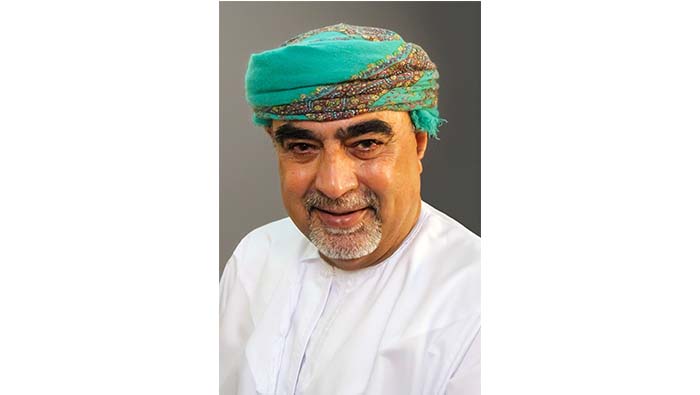
In a shocking and deeply offensive moment for many Omanis, US President Donald Trump reportedly made a threatening remark while discussing tensions surrounding the Strait of Hormuz and Iran, saying that Oman “must behave like everyone else,” or the United States would “blow them up.”
Even by Trump’s well-known standards of provocative rhetoric and political theatrics, the statement crossed a line. Words spoken by the president of a global superpower are not judged merely by intent, but by their implications — especially when directed at a country internationally recognized for diplomacy, neutrality, and peace.
For many Omanis, the reaction was not merely political anger, but genuine disbelief. Oman has never been an enemy of Washington. On the contrary, It has quietly worked for decades to mediate between the United States, Western countries, and their adversaries in the region — without publicity, intimidation, or political bargaining.
This is why many in Oman today are asking a painful question: Is this how goodwill is repaid?
For decades, Oman has played the role of trusted mediator and regional safety valve in some of the Middle East’s most sensitive crises. Secret channels between Washington and Tehran often passed through Muscat. Hostages, detainees, and foreign nationals trapped in conflict zones were repeatedly released or evacuated through Omani mediation and humanitarian diplomacy.
The numbers themselves tell a remarkable story. Oman helped secure the release or humanitarian evacuation of at least 14 living Americans, in addition to the return of one American’s remains. These cases included three Americans released from Iran between 2010 and 2011, along with several Americans freed or evacuated from Yemen in 2015, 2016, 2018, and 2020.
Oman also assisted in the release or transfer of at least nine Europeans, including British, French, and Swedish nationals. In 2022 alone, Muscat facilitated the evacuation of 14 foreign nationals from Yemen, among them seven Indians, a Filipino, an Indonesian, an Ethiopian, and a Myanmar national.
These operations were not merely cold political transactions. They reflected Oman’s longstanding humanitarian approach. Released detainees were received in Muscat, provided medical and logistical support, and treated with dignity and respect before returning home. Families of American detainees freed from Iran publicly expressed deep gratitude toward Oman, with some describing the day their loved ones arrived in Muscat as “the best day of their lives.” Former U.S. Secretary of State John Kerry also publicly acknowledged Oman’s role in securing the release of Americans held in Yemen.
The irony is striking. The very country Washington repeatedly turned to whenever communication with its adversaries collapsed is now being spoken to in the language of threats.
What makes the remark even more troubling is the depth of the historical relationship between Oman and the United States. Relations date back to the 1833 Treaty of Amity and Commerce, making Oman one of the first Arab Gulf states to establish formal ties with America. In 1840, Sultan Said bin Sultan sent the ship Sultana to New York carrying the first official Arab envoy to the United States — an early symbol of mutual respect and openness between the two nations.
For Omanis, Trump’s statement cannot simply be dismissed as another impulsive outburst or political joke. It touched a matter far deeper: national dignity.
At a minimum, many believe a public apology is warranted — not only to Oman, but also to the many Americans, Europeans, and other foreign nationals whose lives were saved through Omani mediation and humanitarian assistance.
Respect cannot be built through threats. Alliances cannot survive humiliation. Nations are ultimately judged not only by military power, but by their values, credibility, and loyalty toward those who stood by them in times of crisis.
Oman, meanwhile, will remain what it has long been: a nation of wisdom, dignity, and peace — one that neither forgets those who helped it, nor those who insulted it.


