Friday 23 / October / 2026
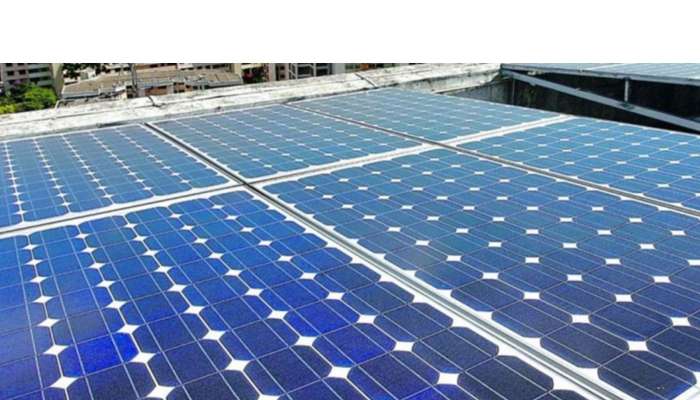
India's rapid electrification and renewable energy expansion are poised to make the country one of the most consequential markets for power equipment over the next decade, according to a McKinsey report.
The report estimated that renewable energy equipment and high-end cables alone could represent a global market of $350b to $400b by 2035, whilst the global power electronics market could exceed $140b over the same period.
Domestically, electricity demand is projected to surge on the back of renewable energy project buildouts, electric vehicle adoption, data centres, and grid expansion.
The fastest-growing segments through 2035 are power electronics, batteries, grid management systems, and energy storage technologies, each expected to expand at over 14% annually.
India's electrical equipment market has already grown sharply, with domestic consumption reaching $59b in FY2025 after an 11% compound annual growth rate over the past five years.
The report projected total domestic electrical equipment consumption could reach $170-205b by 2035.
However, McKinsey warned that the energy transition risks being powered largely by imports if domestic manufacturing does not keep pace.
Import dependence has already climbed from 22% in 2020 to 33% in 2025, and the report cautioned that under a business-as-usual scenario, this could exceed 70% by 2035, creating a production shortfall of more than $130b.
The four segments with the greatest localisation urgency are power electronics, batteries, solar photovoltaic cells and modules, and subcomponents.
The report called for a fivefold expansion in domestic capacity across these areas, as well as in AC compressors, transformers, and cables, to reduce overall import dependence from 33% today to below 14% by 2035.
McKinsey also flagged grid stabilisation technologies and power software as emerging high-growth segments tied to the complexity of managing a renewables-heavy electricity system, as subsea and high-speed rail cables round out the list of priority areas where India could build global export competitiveness.