Monday 03 / August / 2026
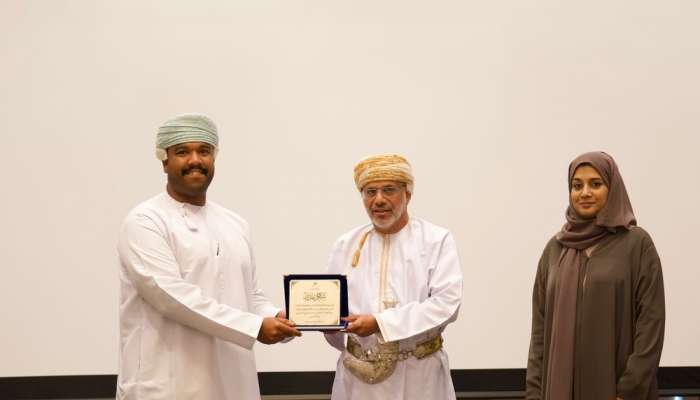
Muscat: The Ministry of Health organised a celebration today marking the World Blood Donor day, observed annually on 14 June and held this year under the theme “One Drop of Humanity. Give Blood. Save Lives”. During the ceremony, the Ministry of Health honoured blood donors.
The ceremony was held under the auspices of Dr. Said Harib Al Lamki, Undersecretary of the Ministry of Health for Health Affairs, and was attended by a gathering of donors, officials and invited guests.
Mohsen Saif Al Sharyani, Head of the Donor Affairs Section at the Blood Services Department of the Ministry of Health, delivered a speech in which he stressed that the celebration of World Blood Donor Day today embodies the highest values of humanitarian giving, and reaffirms that solidarity among members of society remains one of the greatest values that preserve life and safeguard human dignity.
The Head of the Donor Affairs Section highlighted the developments witnessed by blood bank services in the Sultanate of Oman over the past years, noting the expansion of service coverage to bring services closer to donors, as well as the opening of new vital facilities, including the Seeb Blood Donation Center at Al Araimi Boulevard, which was inaugurated earlier this year, in addition to the expansion project of the Blood Services Department building in Bowsher, which is expected to be completed in the coming weeks.
Al Sharyani added that the National campaigns and newly introduced strategies have yielded record-setting achievements, surpassing thousands of units of blood and platelets, which has directly contributed to efficiently and effectively securing the needs of healthcare institutions.
Furthermore, Al Sharyani pointed out that, on the technical side, blood bank services have continued their journey of development and modernization, driven by the belief that the quality of services and the safety of blood are a national responsibility that allows no compromise. Accordingly, laboratory departments have witnessed a comprehensive qualitative transformation, beginning with the standardization of test results and the linkage of blood banks across all governorates of the Sultanate of Oman within an integrated system, and culminating in enhancing the efficiency of all blood banks to operate under unified standards and a team-based approach, thereby strengthening service quality, response speed, and the reliability of results.
The Head of the Donor Affairs Section indicated that, at the Central Blood Bank in Bowsher, advanced specialised services have been introduced, including malaria and viral hepatitis testing, which has contributed to expanding the donor base and enabling new groups to participate in this noble humanitarian act.
He added that modern technologies have also been introduced for the production of blood components, through the operation of automated centrifuge devices using the ‘Reveos’ system, ensuring more efficient and precise production of blood units and their derivatives, while reducing human intervention to the lowest possible level.
At the conclusion of the ceremony, Dr. Said Harib Al Lamki, the Ministry of Health’s Undersecretary for Health Affairs, honored 100 male and female donors, including donors with rare blood types, as well as platelet donors.
The ceremony programme also included the honouring of (30) government, private, and civil institutions, as well as authorities and individuals who have consistently collaborated with the Blood Services Department and contributed to the success of blood donation campaigns.
In this regard, the Ministry of Health calls on citizens and residents to donate blood and to continue this noble humanitarian act, the benefits of which extend to those in need. It noted that there is strong turnout for voluntary blood donation, with some donors having exceeded 200 donations.
A pre-donation screening is conducted to ensure the donor’s eligibility, as blood donation does not affect the donor or cause any harm. This is because the amount of blood collected is approximately 450 milliliters only, while the human body contains around 5 to 6 liters of blood, depending on weight and body size.
The donation process typically takes about 15 minutes, after which the donor can resume normal daily activities. Blood donation is not associated with health complications, as some may mistakenly believe, rather, it helps stimulate blood circulation, supports bone marrow activity, and enhances the body’s immune system.