Thursday 22 / October / 2026
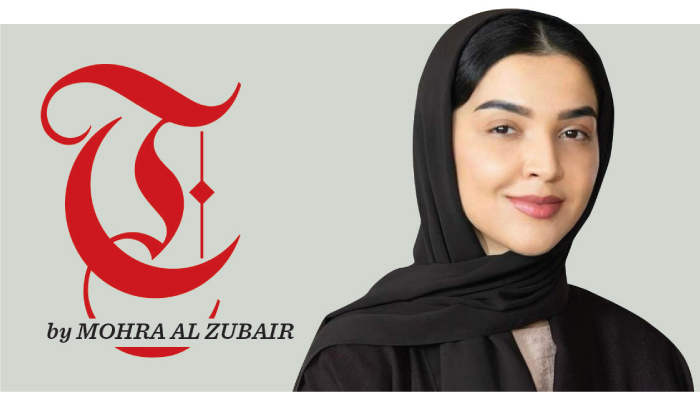
What comes to mind when thinking of a military radio station?
For many, the answer is straightforward: a platform dedicated to military news and content intended primarily for members of the armed forces. Historically, military broadcasting has indeed served those purposes, providing news, maintaining morale, and strengthening communication within military communities and for personnel deployed abroad. My experience with Al Sumood Radio of the Sultan’s Armed Forces introduced me to a broader understanding of what such an institution can represent.
A year ago this July, I was contacted and asked whether I would be interested in presenting a programme on Al Sumood Radio. The invitation came as a genuine surprise. Radio had never been a path I had imagined for myself, and the opportunity to contribute to a station of such stature was an honour that came with a profound sense of responsibility. At the same time, I felt overwhelmed. I had no experience in radio, and I made that clear from the outset.
It was then that Commodore Abdulnasser Al Abri, Head of Morale Guidance and Military Protocol, told me that the media field is vast and that experience is gained along the way. More importantly, he expressed his confidence and trust in my abilities. It was that expression of trust whose significance has remained with me ever since, affirming the idea that trust can become the catalyst that unlocks potential already waiting to emerge.
After submitting a proposal and recording a demo episode, the programme was approved. It became the first English-language programme on Al Sumood Radio. I titled it ‘Within the Path’, a name that reflected the purpose I hoped it would serve: exploring the ideas and strategies that shape the course of individuals, institutions, and nations, with each episode closing on a personal reflection. The programme delved into subjects such as leadership, diplomacy, strategic thought, identity, psychology, Islamic concepts, and moral philosophy, bringing together conversations that sought to understand the ideas that shape various paths.
Before recording the first episode, I remember sitting with my mother and sharing what seemed, at the time, to be my greatest concern:
“The first season is eighteen weekly episodes,” I told her. “How am I going to find enough topics?”
She smiled and replied with complete certainty: “You will.” Then she offered a thought that remained with me throughout the journey: “Just imagine how much knowledge you’ll accumulate by the end of the first season.”
She was right.
At the time, I was only focused on completing the first season, taking on the challenge without fully appreciating the depth of commitment it would demand. I later came to understand it. Each episode required hours of research, preparation, reflection, writing, revision, and recording. By the end of two seasons, I had researched, written, and presented thirty-two episodes. The process reinforced the understanding that meaningful communication begins with meaningful learning. Looking back, the greatest achievement was the knowledge, perspective, and intellectual curiosity that continuously grew through the process.
My own programme, though, was only one part of a much larger picture. Working within Al Sumood also allowed me to see the station from the inside, and to appreciate the impressive breadth of subjects it embraces. Its schedule includes discussions on economics, ethics, history, diplomacy, coexistence, and strategy — even extending to film, through a programme called Aflam Al-Harb (“War Films: When Cinema Becomes a Mirror of Memory”), which analyses international films made about war. Together, these programmes form an educational archive that speaks beyond the military sphere and to all who are interested.
That breadth is significant because institutions often reveal the character of the societies that build them. Al Sumood serves the Sultan’s Armed Forces, while also reflecting a distinctly Omani understanding of service — one that recognises knowledge as an enduring source of strength. The station demonstrates that professional excellence and intellectual curiosity are mutually reinforcing; that discipline is enriched by learning; and that public service includes the cultivation of ideas, ethics, and informed citizenship.
That reach extends beyond the traditional boundaries of radio. Today, Al Sumood’s programmes are available across major podcast platforms, allowing listeners in Oman and abroad to gain insight into conversations taking place in the Sultanate. In doing so, the station has created a growing digital archive for audiences well beyond the moment of broadcast.
The Arabic word sumood means resilience. It is a term associated with perseverance, steadfastness, and strength in the face of challenge. During my time with the station, I came to appreciate another dimension of that concept. Resilience is also found in the discipline of learning continuously, asking thoughtful questions, refining one’s understanding, and always returning with a renewed commitment to contribute something meaningful.
In a rapidly changing global media landscape, the presence of thoughtful, values-driven platforms becomes ever more important.
For me, Al Sumood became far more than a place to present a programme. It became an institution that reminded me that the pursuit of knowledge remains one of the most enduring forms of public service.