Wednesday 14 / October / 2026
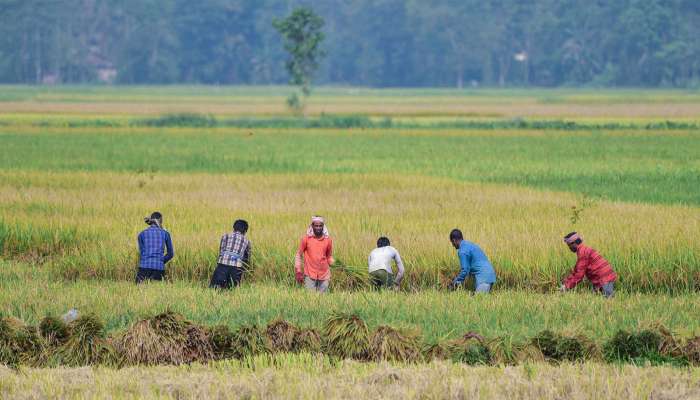
New Delhi: India has intensified its preparedness to cushion the agricultural sector against the potential impact of El Niño, with the Centre rolling out a comprehensive strategy to support farmers and protect the ongoing Kharif cropping season despite an erratic southwest monsoon.
Following a high-level review meeting, India's Union Agriculture and Farmers' Welfare Minister Shivraj Singh Chouhan said monsoon conditions had improved considerably in July after a weak start to the season. The rainfall deficit, which had reached 33 per cent in June, has now narrowed to 24 per cent as several regions received widespread showers in recent weeks.
The improvement has reduced the number of rainfall-deficient districts from 262 to 178, offering fresh optimism for agricultural activity. However, the Centre continues to closely monitor weather conditions in key farming states, including Maharashtra, Madhya Pradesh, Gujarat, Uttar Pradesh, Rajasthan, Karnataka, Bihar, Jharkhand, Telangana, Andhra Pradesh, Punjab, West Bengal and Odisha.
Chouhan expressed confidence that rainfall would strengthen further during July, helping to accelerate Kharif sowing in the coming weeks.
Even with the improved rainfall, sowing remains well behind last year's pace. Kharif crops have been planted across 350.85 lakh hectares, nearly 92 lakh hectares less than the corresponding period last year. The delayed onset of the monsoon has particularly affected soybean and cotton cultivation.
To reduce the impact of the delayed rains, the government has advised farmers in vulnerable areas to shift to short-duration and less water-intensive crops such as maize, bajra and moong, which are better suited to uncertain weather conditions.
The minister said the government began preparations for a possible El Niño event as early as April. Working with the Indian Council of Agricultural Research (ICAR), district-level contingency plans were developed for vulnerable regions and circulated to state governments well before the monsoon season.
To ensure uninterrupted sowing operations, the Centre has maintained a national seed reserve of approximately 1.75 lakh quintals, providing a buffer against any disruption in seed availability.
The government has also accelerated the Kisan Credit Card campaign to improve farmers' access to institutional finance. Of the 1.14 lakh applications received by June 30, more than 94,000 have already been approved.
At the same time, efforts are being intensified to expand coverage under the Pradhan Mantri Fasal Bima Yojana (PMFBY), enabling more farmers to protect themselves against crop losses resulting from adverse weather.
Chouhan said the Centre has activated a multi-layered monitoring mechanism to respond quickly to changing weather conditions. These include the El Niño Monitoring Cell, the Crop Weather Watch Group, state-level control rooms and designated officials who are tracking monsoon progress, sowing, crop health and market developments on a continuous basis.
He stressed that the government is fully prepared to respond through timely interventions, adequate resource mobilisation and coordinated action to ensure farmers receive the support they need throughout the Kharif season.
Meanwhile, the United Nations' World Meteorological Organization (WMO) has warned that strengthening El Niño conditions over the tropical Pacific are likely to trigger more intense heatwaves and extreme weather events worldwide in the coming months.
WMO scientist Alvaro Silva said El Niño typically pushes global temperatures to record levels and is expected to provide an additional boost to warming this year.
According to the WMO's latest Global Seasonal Climate Update, strong El Niño conditions are expected to develop rapidly between July and September. Multi-model forecasts indicate significant warming across the central and eastern equatorial Pacific, with sea-surface temperature anomalies projected to exceed 2 degrees Celsius, raising concerns over potential impacts on global weather patterns, agriculture and food security.