Saturday 10 / October / 2026
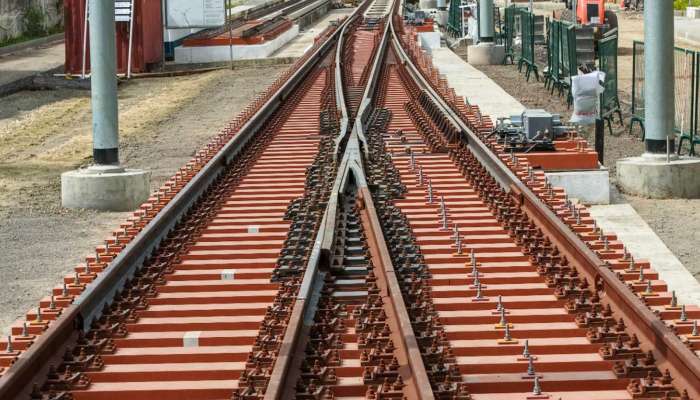
On 5 October, Jordan’s King Abdullah II and Sheikh Khaled bin Mohamed bin Zayed Al Nahyan, Crown Prince of Abu Dhabi, laid the foundation stone for the Aqaba–Shidiya–Ma’an railway. While the line is primarily intended to transport phosphate and potash to the Red Sea port of Aqaba, it could also become an important building block for the India–Middle East–Europe Economic Corridor (IMEC).
Announced at the G20 summit in New Delhi in 2023, IMEC envisages connecting India with the Gulf, the Middle East and Europe through maritime and railway networks. While India and the UAE already have established maritime links, the Emirates have developed Etihad Rail, and Saudi Arabia continues to expand its railway infrastructure. Israel’s railway network reaches Beit She’an, near the Jordanian border, with connections towards Haifa.
Jordan remains a crucial missing link between these networks.
Although Amman was not among the original signatories to the IMEC memorandum in 2023, its geographical position makes it difficult to bypass. A potential railway connection between Saudi Arabia and Israel would naturally cross Jordanian territory, making the country important to the corridor’s future development.
The Aqaba–Shidiya–Ma’an project is expected to connect mining areas with Aqaba and a planned dry port at Ma’an. Jordan’s broader railway plans envisage an approximately 418-kilometre Aqaba–Ma’an–Madouneh backbone extending towards the Amman area. Future connections could link Jordan with Saudi Arabia to the south, Syria and Turkey to the north, and potentially Israel to the west.
Such connectivity could support two emerging regional trade routes: one running through Jordan towards Israel and the Mediterranean as part of IMEC, and another extending through Syria and Turkey towards Europe. Aqaba would provide an additional gateway to the Red Sea.
The UAE’s involvement is particularly significant. As a key Gulf partner in IMEC, Abu Dhabi is contributing investment and railway expertise to Jordan’s infrastructure development, potentially laying the groundwork for future regional connectivity.
For Jordan, the objective extends beyond facilitating international transit. By developing dry ports, logistics centres and industrial zones, Amman hopes to turn its strategic location into employment, investment and broader economic growth.
The railway also offers immediate domestic benefits, serving Jordan’s mining sector and strengthening the economy without depending on the resolution of regional political disputes.
The Aqaba–Shidiya–Ma’an railway is not itself an IMEC project. However, it could help address one of the corridor’s major infrastructure gaps by establishing a foundation for future cross-border connections.
The foundation stone laid at Aqaba may therefore represent an early step towards integrating Jordan into a wider transport network linking India, the Gulf and Europe. Trade routes cannot eliminate regional conflicts, but they can create shared economic interests that make connectivity increasingly valuable.