Wednesday 21 / October / 2026
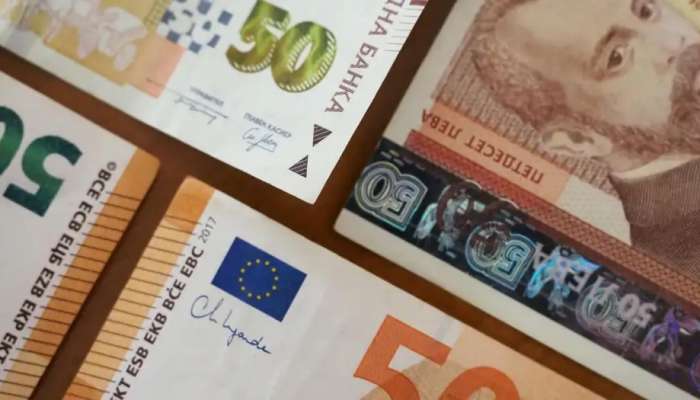
Sofia: Bulgaria is set to adopt the euro on January 1, 2026, making it the 21st member state of the eurozone.
Joining the currency club marks a major milestone for the Eastern European country, which entered the European Union in 2007.
Bulgaria’s accession leaves only six of the 27 EU nations outside the currency union: Sweden, Poland, the Czech Republic, Hungary, Romania and Denmark.
The euro is “not just a currency but a strategic choice” that strengthens Bulgaria’s position in Europe, Bulgarian Prime Minister Rosen Zhelyazkov said at a high-level conference in the Bulgarian capital, Sofia, in November.
At the same event, Christine Lagarde, president of the European Central Bank, said the euro adoption “bolsters Bulgaria’s economic foundations, builds its resilience against global shocks and amplifies its voice in euro area decision-making.”
But not everyone is optimistic about the Balkan nation’s entry into the eurozone.
“Supporters of Bulgaria’s entry into the eurozone point out the fact that by joining the ‘club of the rich,’ the country will benefit and will achieve significant progress,” Rossitsa Rangelova, professor at the Bulgarian Academy of Sciences’ Economic Research Institute, told DW.
“Things are presented as if Bulgaria will automatically increase its standard of living and prosperity, but it is not justified how this will happen given the need for mandatory and postponed reforms, without which our country would not be an equal participant,” she added.
How is Bulgaria’s economy performing?
Bulgaria’s national currency, the lev, has been pegged to the euro since the latter’s introduction in 1999.
Sofia formally began the process of joining the currency bloc in 2018, and the lev was then included in the European Exchange Rate Mechanism in July 2020.
The European Commission and euro area finance ministers earlier this year greenlighted the nation’s eurozone membership bid.
Becoming a euro area member demonstrates how the Bulgarian economy has improved over the past decade. Macroeconomic indicators remain stable, with inflation now hovering at around 2.8%, down from around 13% in 2022.
The budget deficit and debt levels are low — at about 3% and 24%, respectively — complying with EU rules that mandate member states to keep their deficits within 3% of economic output, and their total fiscal debt within 60% of GDP.
Growth prospects also look positive. The EU estimates the country’s real GDP to grow around 3% this year, by 2.7% in 2026 and 2.1% in 2027.
Bulgaria still has a ‘lot of catching up to do’
“Bulgaria’s macroeconomic performance has been stable in the last decades, even though its economic growth and catch-up has been suboptimal,” Guntram Wolff, an expert on euro-area fiscal policy at the European economic think tank Bruegel, told DW.
Norbert Beckmann, head of the Konrad Adenauer Foundation office in Bulgaria, shared a similar view.
Bulgaria meets all the convergence criteria for joining the eurozone, he said, pointing in particular to the country having one of the lowest debt ratios in Europe.
“However, the Bulgarian economy still has a lot of catching up to do in terms of structure and performance. The income level in Bulgaria is also only 59% of the EU average.”
But the experts caution against the Bulgarian government loosening the purse strings and overspending after the euro adoption.
“The main risk is that after the accession to the euro, the budget constraint might be seen as less binding by the political system and deficits could grow,” said Wolff. “But given low debt levels, I don’t think this risk is significant.”
Beckmann also underscored the need to avoid market distortions.
“It is important that incomes always reflect the economy’s capacity and that people do not live beyond their means. If incomes become decoupled and are artificially inflated by borrowing, this can lead to distortions, as we have seen in Greece,” he told DW.
Political turmoil poses risks
At the same time, political instability presents a grave challenge. Public anger and frustration have run high in recent months due to economic mismanagement and rampant corruption.
Bulgaria — one of the poorest in the EU — ranks among the bloc’s most corrupt countries, according to Transparency International’s Corruption Perceptions Index.
The Balkan country of 6.4 million people has already held seven parliamentary elections since 2021 — and it could face more elections in the coming months.
Prime Minister Zhelyazkov’s government resigned on December 11 amid mass protests over graft and the administration’s budget plans, including higher taxes and increased social security contributions.
Although the budget was withdrawn, popular anger has persisted.
If efforts to set up a new government fail, the president will appoint an interim administration and call a snap election, which would be the eighth in four years.
And should the vote fail to produce a functioning coalition, it could prolong the political turmoil and erode investor confidence.
Public split on euro adoption
Bulgarians are also split on euro adoption, surveys show. Supporters of the common currency say it will boost foreign investment flows into the country, eliminate foreign exchange costs and lead to greater integration into the EU single market, among other things.
Skeptics, however, fear a spike in inflation as prices of goods and services are converted from the national currency, the lev, to the euro following the currency switch. Some also worry about losing control over monetary policy to the European Central Bank in Frankfurt.
“The eurozone accession process will not benefit the economy of Bulgaria. It would become a periphery for the eurozone, less flexible and unable to reduce or eliminate its shocks on its own,” said Rangelova.
She also criticised Bulgarian authorities for not holding a referendum on the euro accession. “For such fundamental projects, the government of any democratic country takes into account the opinion of the public,” she said, noting that “the Bulgarian authorities have categorically rejected referendums as a form of public opinion over the years and still find ways to ignore them.”