Saturday 02 / May / 2026
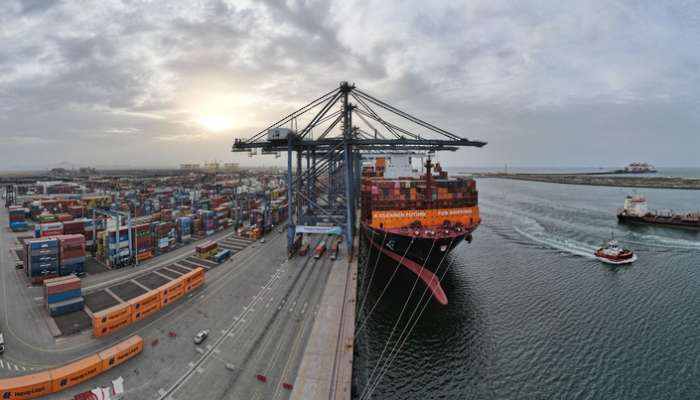
Muscat: The Sultanate of Oman has made significant strides in enhancing the efficiency of its international trade and strengthening its competitiveness in logistics by streamlining customs procedures, promoting digital trade, and developing its strategic ports.
Oman’s three main seaports — Sohar Port, Duqm Port, and Salalah Port — play a central role in connecting the Sultanate to regional and global markets. As part of its economic diversification strategies, Oman has invested in upgrading port infrastructure, enhancing operational and digital efficiency, and meeting the growing demands of trade volume.
The Royal Oman Police, through the General Directorate of Customs, has implemented qualitative improvements across administrative, procedural, and technical levels to enhance customs services for the business community, facilitate international trade, attract foreign investment, strengthen the logistics sector, and secure supply chains. A key initiative is the 'Bayan' system, which integrates 74 government and private entities and offers 496 electronic services.
These include pre-clearance customs, electronic payments, deferred tax payments, clearance under bank guarantees, temporary import requests, and goods splitting requests, all without the need to visit customs offices or ports.
Such initiatives have contributed to Oman’s leading position in trade facilitation.
According to the World Bank’s Doing Business 2020 report, Oman ranked first in the Gulf in the Cross-Border Trade Index, thanks to infrastructure upgrades at Sohar Port, the introduction of electronic risk-based inspections, and the development of the customs audit system.
Further measures include the Secure Customs Corridor initiative, which connects ports with free zones and investment warehouses, streamlining the movement of goods between customs zones.
In addition, the Electronic Air Waybill initiative allows air carriers and handling authorities to submit shipping documents electronically, speeding up clearance processes.
These developments form part of Oman’s broader digital transformation and trade facilitation strategy, enhancing its role as a competitive regional and international logistics hub.
The e-commerce sector has also seen remarkable growth, driven by rising online consumer activity and strengthened digital infrastructure. The market was valued at US$575 million in mid-2023, with projections reaching US$1.1 billion by 2028, growing at a CAGR of over 13%. Increased internet penetration, exceeding 90% of the population, and the promotion of electronic payments contributed to a 40% rise in transaction volumes, supported by digital wallets and the national payment gateway. Oman is also cooperating with neighboring countries to streamline cross-border e-commerce flows.
Eng. Abdullah bin Ali Al Busaidi, Director General of the Oman Logistics Center, Ministry of Transport, Communications and Information Technology, told ONA that these measures reduce the cost and time of goods movement while improving Oman’s competitiveness as a global logistics hub through integrated transport systems and digital solutions.
Omar bin Mahmoud Al Mahrizi, CEO of Asyad Ports and Freezones, highlighted that the maritime transport sector achieved a 12% compound annual growth rate between 2018 and 2024, reflecting the efficiency of Omani ports.
He noted that Omani ports are currently linked to 86 commercial ports in 40 countries through around 200 direct weekly trips, positioning them as global logistics centers.
He emphasised that ports continue to drive economic development by integrating with free zones and economic zones, offering investment incentives, pre-clearance systems, and advanced digital procedures that accelerate goods release, reduce inspections, and lower operating costs. In addition, Oman’s strategic location along major shipping routes and partnerships with global shipping companies enhance its role as a global trade and logistics hub.
These initiatives support the National Logistics Strategy 2040, aiming to establish the Sultanate of Oman as a leading global logistics center, ensuring the smooth flow of supply chains and securing essential goods for local markets.