Thursday 03 / September / 2026
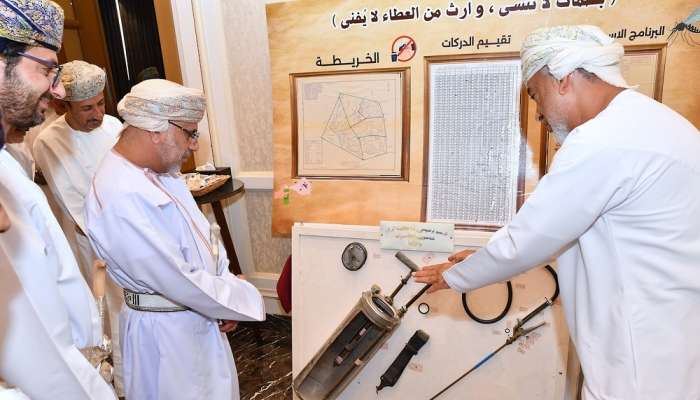
Muscat — In a strategic step to strengthen the public health system and enhance national preparedness, the Ministry of Health, represented by the Centre for Disease Control and Prevention, launched today the “National Strategy for Vector Surveillance,” alongside the electronic “Rased” programme.
The launching ceremony was held under the patronage of Dr. Said Harib Al Lamki, Undersecretary of the Ministry of Health for Health Affairs. Several officials and specialists from various sectors attended the event.
This launch demonstrates the Sultanate of Oman’s commitment to enhancing its health security system in alignment with the objectives of Oman Vision 2040. The project seeks to transition from a traditional reactive approach to a proactive model grounded in foresight and thorough scientific analysis of field indicators.
In this regard, Dr. Zakaria Yahya Al Balushi, Director General of the Centre for Disease Control and Prevention, stated in his speech that digital transformation in health surveillance represents a cornerstone in building a healthcare system capable of predicting risks before they occur, rather than merely responding to them after their occurrence. He emphasized that epidemiological surveillance is no longer an option, but a strategic necessity for safeguarding public health.
The Director General of the Centre for Disease Control and Prevention indicated that achieving the objectives of this strategy requires genuine integration among the health, environmental, municipal, and other sectors within an effective national partnership that reflects the “One Health” approach. He affirmed that these efforts are fully aligned with Oman Vision 2040, which places innovation, efficiency, and service quality at the core of its priorities.
The ceremony also witnessed the launch of the “Rased” programme, a smart national platform that serves as a technical link between field teams and decision-makers. The programme has the ability to standardize procedures and rapidly transmit data with high efficiency, ensuring the conversion of epidemiological, entomological, and climatic indicators into immediate operational decisions capable of containing risks before they escalate into outbreaks.
The ceremony also included a visual presentation highlighting the key features of the National Strategy and the evolution of the surveillance system in the Sultanate of Oman.
The patron of the event toured the accompanying exhibition, which featured an interactive information booth for the “Rased” platform, models of the latest field surveillance tools and technologies, as well as illustrative displays showcasing the integration of epidemiological, environmental, and population data.
This launch represents the announcement of a new institutional phase that positions the Sultanate of Oman among advanced countries in adopting global best practices in the integrated management of disease vectors. Through this system, the Ministry of Health aims to reduce response time and improve resource allocation, thereby ensuring the protection of society and the sustainability of national health gains.