Wednesday 20 / May / 2026
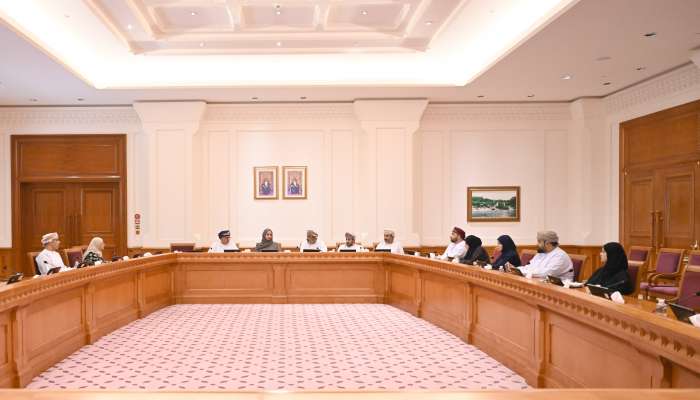
Muscat: The Education, Scientific Research and Innovation Committee at the Shura Council discussed on Wednesday, with specialists from the Oman Authority for Academic Accreditation and Quality Assurance of Education, the proposal concerning professional undergraduate programmes represented by the “Professional Bachelor’s Degree” and professional postgraduate programmes represented by the “Professional Master’s Degree” and “Professional Doctorate” in the Sultanate of Oman.
The discussion comes within the framework of the committee’s competencies aimed at developing the higher education system and enhancing its alignment with national development requirements and the evolving needs of the labour market.
At the outset of the meeting, Dr. Ali Nasser Al Harasi, Chairman of the Education, Scientific Research and Innovation Committee at the Council, welcomed Dr. Jawkha Abdullah Al Shukaili, Chief Executive Officer of the Oman Authority for Academic Accreditation and Quality Assurance of Education.
He commended the Authority’s continued efforts in developing the academic accreditation system and ensuring the quality of education at various levels, as well as the tangible expansion of its scope of work to include multiple educational institutions, including institutes and public and private schools, in a manner that contributes to enhancing education quality and improving learning outcomes in line with national and international standards.
During the meeting, a comprehensive visual presentation was delivered addressing the National Qualifications Framework in the Sultanate of Oman, its objectives, structure, and educational pathways, in addition to reviewing the concept of professional qualifications and the mechanisms for their inclusion and alignment within the National Qualifications Framework.
The presentation also reviewed the role of the framework as a national tool for classifying, comparing, and describing various educational and training qualifications, thereby enhancing recognition of Omani qualifications locally and internationally, supporting the principle of lifelong learning, and providing more flexible pathways for learners and individuals seeking professional and academic advancement.
The presentation further addressed the organisational structure of the National Qualifications Framework, which includes various educational pathways, including academic, technological, professional, technical, and vocational tracks.
It also clarified the fundamental differences between academic, vocational, and professional qualifications in terms of learning outcomes and the extent of their direct linkage to labour market requirements and specialised professions.
In addition, the presentation reviewed models of descriptor standards for professional qualifications, mechanisms for evaluating the academic weight of qualifications, and procedures related to accreditation, inclusion, and alignment in accordance with the Authority’s approved standards.
Specialists also reviewed a number of professional qualifications that have already been included or aligned within the National Qualifications Framework, in addition to qualifications currently undergoing completion procedures for inclusion during the current year.
They further outlined the key challenges facing the inclusion of professional qualifications, including academic licensing requirements, the need for specialised human resources, and organisational and legislative aspects related to accrediting vocational and professional programmes.
The presentation additionally highlighted the importance of completing the regulatory bylaws governing professional and vocational qualification programmes in a manner that accelerates procedures and achieves effective alignment with economic development and labour market requirements.
For their part, Their Excellencies the Members of the Council raised several inquiries regarding benchmarking mechanisms for professional qualifications and the extent of their compatibility with international and regional standards, in addition to challenges related to offering such qualifications within higher education institutions and the readiness of the academic and legislative environment to accommodate them.
Discussions also addressed the types of qualifications required in the labour market and the importance of designing specialised professional programmes responsive to the actual needs of economic and productive sectors and contributing to the provision of qualified national cadres possessing the necessary applied and professional skills.
During their interventions, Their Excellencies stressed the importance of strengthening the direct linkage between introducing professional qualifications and labour market needs to ensure the effectiveness of these programmes in addressing professional and specialised gaps and enhancing the readiness of national competencies to engage in various economic sectors.
They also proposed several priority professional qualifications, particularly in technical, applied, and vocational fields associated with promising sectors, emphasising the importance of establishing flexible and progressive educational pathways enabling graduates of vocational education to continue their university and postgraduate studies within accredited and recognised professional frameworks.
This study comes within the framework of enhancing students’ interest in vocational school education pathways culminating in professional diplomas and establishing university and higher professional pathways for graduates of these programmes, thereby expanding their educational and professional opportunities.
The study also aims to develop the professional competencies of job seekers and employees across various sectors and support national efforts aimed at human resource development and empowering Omani youth with professional and applied skills aligned with the requirements of the national economy and future labour market transformations.
The meeting additionally reviewed the efforts of the Oman Authority for Academic Accreditation and Quality Assurance of Education in establishing an integrated national system for ensuring the quality of education at various levels and types in accordance with approved international standards.
The Authority also works to encourage educational institutions to establish effective internal systems for quality assurance and continuous improvement, while evaluating the performance of public and private schools and ensuring the quality of public and private higher education institutions and programmes through institutional and programme accreditation processes and other quality assurance activities implemented in accordance with approved national standards and procedures.
The meeting was chaired by Dr. Ali Nasser Al Harasi, Chairman of the Education, Scientific Research and Innovation Committee at the Shura Council, in the presence of Their Excellencies the Members of the Committee and a number of specialists from the Oman Authority for Academic Accreditation and Quality Assurance of Education.