Monday 08 / June / 2026
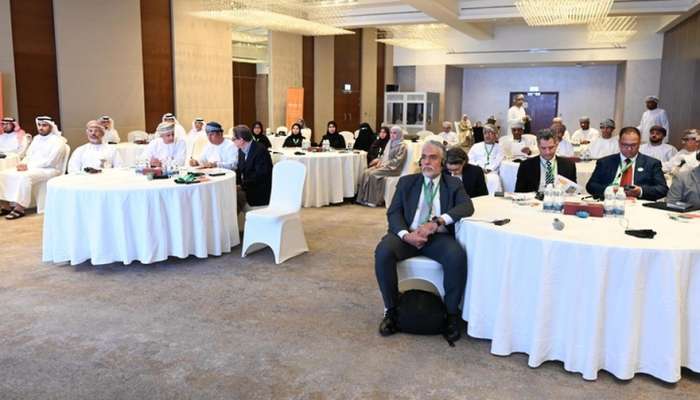
Muscat: A GCC workshop held today in Muscat, titled "Consultancy Services in the Field of Using Modern Technologies and Artificial Intelligence in Farm Management," discussed the growing challenges facing agricultural and food systems in the Gulf countries.
Held under the auspices of Dr. Ahmed Nasser Al Bakri, Undersecretary of the Ministry of Agriculture, Fisheries and Water Resources for Agriculture, the workshop deliberated on several topics, including the scarcity of water resources and their high salinity, rising temperatures, degradation of soil fertility, and the limited availability of arable land.
The three-day workshop, featuring the participation of representatives and experts from the countries of the GCC, the GCC Secretariat General, and the International Center for Agricultural Research in the Dry Areas (ICARDA), addressed the heavy reliance on food imports, a factor that renders enhancing the resilience and sustainability of food systems a strategic priority for the countries of the region.
The workshop included discussions on a project for introducing, evaluating, disseminating, and providing consultancy services in the field of using modern technologies and artificial intelligence in farm management, increasing productivity, and improving product quality in the GCC countries.
The project comes within the framework of the joint Gulf approach toward adopting smart agriculture and the drive towards digital transformation, in alignment with the food security strategies of the GCC states. The project leverages the rapid advancements in the fields of artificial intelligence and the Internet of Things (IoT) to develop the agricultural sector and raise its productive efficiency.
The project aims to develop an integrated system for employing modern technologies in farm management, thereby contributing to increasing productivity, improving the quality of agricultural products, enhancing the efficient use of natural resources, and supporting the sustainability of agricultural development in arid and semi-arid environments. It focuses on building national capacities and qualifying technical, extension, and farming cadres to utilize artificial intelligence and digital agriculture applications and turn them into practical on-the-ground practices.