Saturday 29 / August / 2026
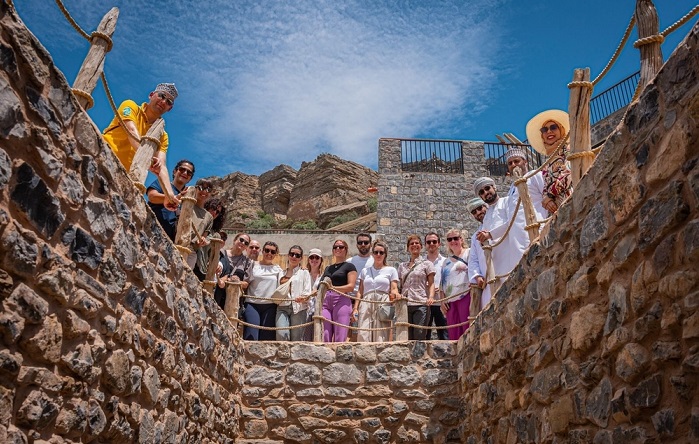
Muscat: The Sultanate of Oman is pressing ahead with steps to consolidate its tourism standing as a global destination that attracts visitors from all over the world, thanks to the country’s natural diversity and cultural richness.
According to statistics from the Ministry of Heritage and Tourism, the number of French tourists saw a remarkable growth of 25 percent during 2025, to a total of 77,000 as against the figures of 2024.
The number of French tourists who visited the Oman during the first quarter of 2026 stood at more than 24,600—an increase of 10 percent over the number of French tourists registered during the corresponding period in 2025.
Khulood Salim Al Kaabi, Head of the European and American Markets Department at the Ministry of Heritage and Tourism, attributed the growth in number of French tourist to the success of promotional efforts made by the Ministry in the French market.
Khulood added that the Oman boasts a positive image and a solid reputation among French tourists. This standing gains further significance due to Oman’s stability and security, she said, noting that this is coupled with the country’s approach to international peace and openness that enhanced its appeal as a reliable and preferred tourist destination for visitors from all over the world.
As part of efforts to develop national competencies, Khulood Al Kaabi said that the Ministry of Heritage and Culture, acting in cooperation with the Ministry of Labour, conducted a 5-month training programme to hone the skills of French-speaking tourist guides as part of its efforts to improve the quality of tourism services.
Over 350 French tourism companies received guidance about Oman’s culture last year as part of an ongoing programme designed to familiarise tourists with the competitive advantages of the Oman, said Khulood Al Amri.
She pointed out that Oman Air operates between four and five weekly flights between Charles de Gaulle International Airport and Muscat International Airport—further consolidating air links with the French market.
On the cultural heritage side, Ibtisam Abdullah Al Maamari, Director of the World Heritage Department at the Ministry of Heritage and Tourism, said that Oman ratified 5 of the 6 UNESCO conventions on cultural heritage. She added that Oman served as a member of the World Heritage Committee during the years 1989–1995, 2001–2005 and 2019–2023.
Ibtisam explained that five Omani sites were included on the World Heritage List: Bahla Fort, the archaeological sites in Bat, Al Khutm-Al Ain site, the Land of Frankincense site, Aflaj irrigation system and the historic city of Qalhat.
Ibtisam noted that the Oman’s tentative list currently includes seven sites nominated for future incorporation in the World Heritage List. These, she said, include Al Rustaq Castle, Al Hazm Fort, the Daymaniyat Islands Nature Reserve, Jabal Samhan Nature Reserve, the Wetlands Reserve (in Al Wusta Governorate), the archaeological cultural landscape site of Wahda, Siya and Salloot, Ras Al Hadd Reserve and Ras Al Jinz Archaeological Site (a mixed-purpose site).
Over the past few decades, Oman contributed effectively to UNESCO’s initiatives on the Maritime Silk Road, said Ibtisam, noting Royal Yacht (Fulk Assalama) was used in the pioneering expedition organized by UNESCO between 1990 and 1991—an initiative aimed at highlighting the historical role of the Silk Road as a bridge for dialogue and cultural exchange between peoples.
Ibtisam observed that the Sultan Haitham Award for the Safeguarding of Intangible Cultural Heritage was an international trophy that cemented the ongoing partnership between the UNESCO and the Sultanate of Oman, with the prime objective of felicitating the efforts and institutions that make considerable contributions to the protection, preservation and promotion of intangible cultural heritage at a global level.