Thursday 22 / October / 2026
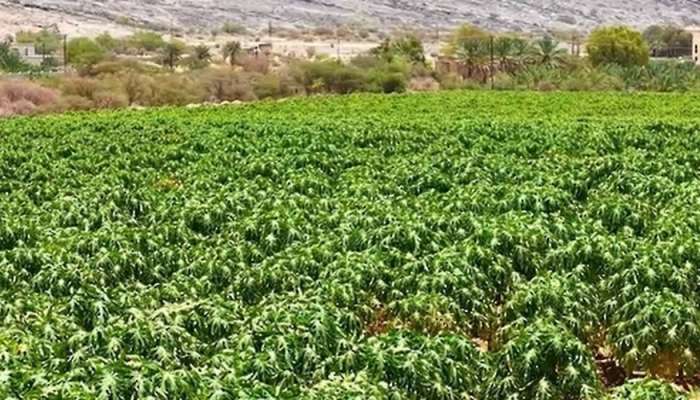
Nizwa: The papaya fruit is emerging as a promising agricultural crop, valued for its high nutritional content and economic viability, contributing to food security and the development of the agricultural sector. Youth-led and investment projects in the Sultanate of Oman are increasingly turning to this crop.
Faisal bin Ali Al Bahri, owner of papaya cultivation project, has harnessed the natural advantages of Al Dakhiliyah Governorate to establish a venture that strengthens food security, boosts local output and advances sustainable agriculture.
Al Bahri said his project comprises about 9,000 trees of the Taiwanese hybrid variety “Red Lady”, known for rapid fruiting, high yield and superior quality. The trees are spread across four acres under a modern system that optimises land use and enhances production.
The project yields an average of two to three tonnes of fresh fruit per week, ensuring a steady year‑round supply to local markets with high quality and marketable standards, he said.
On marketing, Al Bahri said the project meets demand in Nizwa, Bahla and Al Hamra, while also supplying central markets such as the Central Market of Samail, promoting Omani produce across governorates.
He added that the project stands out for its high production density on limited land, reflecting intensive and smart land use. The early‑fruiting variety produces weekly without interruption, and the fruit’s durability reduces losses during transport, minimising waste.
Environmentally, the project expands green cover, curbs desertification and fosters a more sustainable agricultural system, Al Bahri added.
He pointed out that the project offers a sustainable income source and opens opportunities for papaya‑based processing industries such as juices, jams and natural care products, enhancing the added value of local produce.
On tree care, Al Bahri said a comprehensive programme ensures high yields through balanced fertilisation with treated organic fertilisers, continuous pruning for ventilation and sunlight, and thinning of damaged or overcrowded fruit to promote optimal size and shape for marketing. The project uses modern drip irrigation with fertigation systems to optimise water and fertiliser use.
As for the challenges, he said they include insect and fungal infestations such as mealybugs and root fungi, managed through early inspection and integrated pest management with environmentally friendly pesticides. Heat stress is addressed by scheduling irrigation during cooler times and maintaining soil moisture to reduce flower drop.
Al Bahri said the project receives technical support from the Ministry of Agriculture, Fisheries and Water Resources through field visits, guidance on pest control and food safety, and logistical support to help market and distribute produce to commercial outlets.