Tuesday 25 / August / 2026
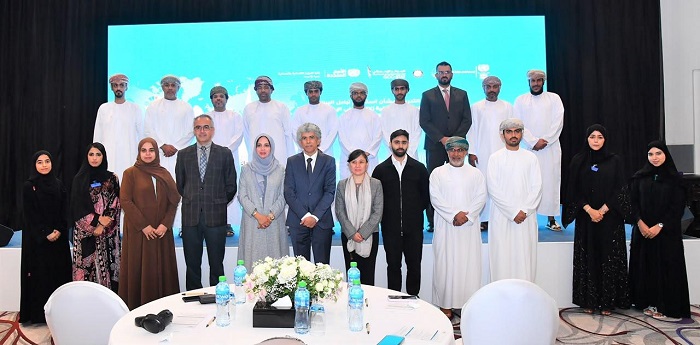
Salalah: A training workshop was held in Salalah on Tu8esday on the use of statistical and metadata exchange in reporting on the Sustainable Development Goals (SDGs) in GCC states. The workshop focused on ways to enhance national capacities in using the SDMX standard, being a global measure for the systematic and consistent exchange and dissemination of data.
The workshop aimed at raising the efficiency of representatives of statistical offices in GCC states, the GCC Statistical Centre, SDG focal points, metadata experts and IT professionals.
Dr. Intisar Abdullah Al Wahaibi, Director General of the GCC Statistical Centre (GCC-Stat), stressed the importance of consolidating cooperation among GCC states and international partners to develop a system of SDG indicators and to ensure the availability of accurate, reliable and up-to-date official data. This, she added, would contribute to measuring progress and supporting the formulation of evidence-based policies.
In a speech at the workshop, Dr. Intisar explained that the proliferation of data sources, coupled with the rising demands for reporting on SDGs, present challenges that extend beyond simply providing data. These challenges, she said, include the ability to organise, update and exchange data efficiently and in a timely manner.
Dr. Intisar pointed out that the SDMX standard is a crucial tool for organising and exchanging data and metadata and minimising manual procedures.
“The need to ameliorate data systems is gaining momentum as we approach 2030 due to the fact that data and statistics are fundamental to measuring progress, identifying gaps, guiding public policies, improving resource allocation and enhancing transparency and accountability,” she observed.
In this context, Dr. Intisar reviewed several positive outcomes achieved by the GCC states during 2025 in the availability of official data on various sectors, including health, education, electricity and digital infrastructure indicators, noting that internet penetration exceeded 95 percent of the population.
She affirmed that these results reflect the developmental progress achieved by the GCC countries, while simultaneously highlighting the need to continue updating data in a manner that enhances comparability, notably in social, environmental and economic fields and including data on women, skills, renewable energy, youth empowerment, research, biodiversity and food security.
Dr. Intisar noted that the importance of data lies, not merely in its numerical value, but also in the ability to produce, update and exchange data through a unified and reliable system. This goal, she said, could optimally be realised through the implementation of the SDMX standard.
The workshop elaborated on various aspects of the SDMX standard and upgraded the participants' ability to align SDG indicator data with global reporting requirements.
The trainees also conducted practical exercises that contribute to enhancing the use of the SDMX standard, improving the exchange of data on SDG indicators and supporting cooperation between GCC states and the United Nations.
The workshop also included practical training in converting national data to standard SDMX formats, in addition to assessing the status of GCC indicator data according to the GCC-Stat's databases.
The workshop was organized by the GCC-Stat, in cooperation with the United Nations Economic and Social Commission for Western Asia (ESCWA) and the United Nations Statistics Division.