Monday 07 / September / 2026
New Delhi: Google-backed Indian spacetech startup Pixxel has raised $100 million (about ₹945 crore) in a Series C funding round co-led by Singapore’s sovereign wealth fund Temasek and UK-based spacetech investor Seraphim.
New investors 360 ONE Asset and IMM Investment joined the round, alongside existing backers including Radical Ventures and growX ventures.
The latest funding takes Pixxel’s total capital raised to $195 million, making the Series C the largest single funding round raised by an Indian spacetech company, according to the Bengaluru-based startup. Pixxel did not disclose its valuation following the round.
The company plans to use the fresh capital to expand its satellite sensing capabilities, strengthen its Aurora Earth intelligence platform, develop sovereign space systems and scale up satellite manufacturing.
Pixxel said it will broaden its sensing capabilities through its upcoming Honeybee constellation, high-resolution optical imaging satellites and other technologies. Aurora will serve as a software layer integrating satellite data to generate insights for governments, businesses and research institutions.
The company will also increase production at Gigapixxel, its Bengaluru satellite manufacturing facility inaugurated in 2024. The facility can accommodate more than 20 satellites simultaneously and has an annual manufacturing capacity of up to 40 satellites.
“Years ago, we set out to build a health monitor for the planet,” Pixxel founder and CEO Awais Ahmed said. “Hyperspectral imaging gave us a fundamentally new way to see Earth. This new investment gives us the scale to turn that vision into planetary infrastructure.”
Founded in 2019 by BITS Pilani alumni Awais Ahmed and Kshitij Khandelwal, Pixxel initially focused on hyperspectral Earth-observation satellites.
Unlike conventional imaging satellites, hyperspectral systems capture light across numerous narrow wavelength bands, enabling them to identify materials and changes on Earth's surface that may not be visible in standard satellite imagery.
The technology has applications in agriculture, mining, oil and gas, environmental monitoring, defence and disaster management.
Pixxel currently operates six Firefly hyperspectral satellites and says they constitute the world's highest-resolution commercial hyperspectral satellite constellation. Its first three Firefly satellites were launched aboard SpaceX's Transporter-12 mission in January 2025, marking the deployment of India's first private satellite constellation.
The startup has also secured contracts from NASA and the US National Reconnaissance Office and won multiple iDEX challenges from India's Ministry of Defence.
Under India's space programme, Pixxel has been selected to lead development of the country's first public-private Earth-observation satellite constellation through IN-SPACe. The proposed constellation will comprise 12 satellites equipped with different imaging sensors.
Beyond Earth observation, Pixxel has partnered with AI company Sarvam to develop Pathfinder, a 200-kg orbital data-centre demonstration satellite. Pixxel will design, launch and operate the satellite, while Sarvam will provide AI training and inference capabilities in orbit.
Pixxel's latest fundraise comes amid growing investor interest in India's private space sector.
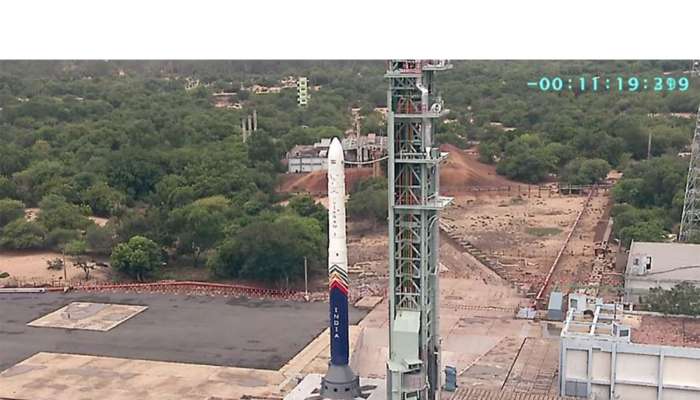
In May, Skyroot Aerospace raised $60 million at a pre-money valuation of $1.1 billion, becoming India's first spacetech unicorn. The company subsequently completed India's first private orbital rocket mission in July, placing customer payloads into low-Earth orbit with its Vikram-1 launch vehicle.
Other Indian spacetech startups, including Agnikul Cosmos, Digantara, Bellatrix Aerospace, GalaxEye, Dhruva Space and SatSure, are developing technologies spanning launch vehicles, satellite manufacturing, propulsion, space situational awareness, Earth observation and downstream space analytics.