Saturday 28 / November / 2026
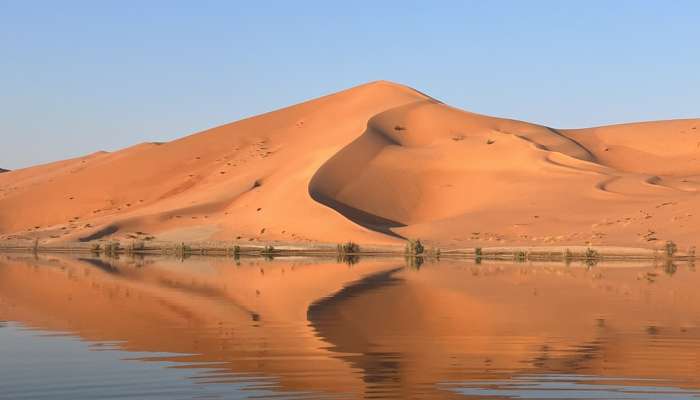
Muscat: An international scientific study involving Omani researchers has found that the availability of fresh water and rocks suitable for making stone tools played a crucial role in determining where ancient humans settled in the desert environments of the Arabian Peninsula hundreds of thousands of years ago.
The findings were featured on the cover of the latest issue of the international scientific journal Nature in a study titled “Stone and Water: The Rules of Ancient Human Settlement in the Desert”.
The research was conducted by Dr. Ali bin Hamoud Al-Mahrouqi, researcher at the Department of Archaeological Surveys and Excavations at the Ministry of Heritage and Tourism, and Dr. Mohammed bin Hilal Al-Kindi, geologist and CEO of the Earth Sciences Consulting Centre. They were part of an international team of 10 researchers from six countries, working with universities and research institutions.
The study draws on more than two decades of archaeological surveys and research in Oman, conducted under the supervision of the Ministry of Heritage and Tourism. The work documented hundreds of archaeological sites dating to the Middle Stone Age, particularly in Dhofar Governorate and along the western slopes of the Al Hajar Mountains.
The researchers found that access to freshwater alone was insufficient to support ancient human settlement in desert environments. The availability of suitable rocks, particularly flint used in manufacturing stone tools, was equally important.
The findings revealed that around 57 percent of the areas near ancient river courses across the Arabian Peninsula lie above geological formations that lack suitable stone resources.
These conclusions followed an expedition across the Empty Quarter in late 2023, covering approximately 1,500 kilometres and examining 125 sites. Environmental and geological evidence of ancient freshwater lakes was identified at 55 sites, but no stone tools were found, largely due to the absence of suitable raw materials.
Oman provided an important testing ground for the study's scientific model. Researchers analysed data from 301 Middle Stone Age archaeological sites documented during 44 field survey campaigns since 2002. The results established a strong relationship between archaeological site distribution and the combined availability of water and suitable rocks, particularly across the Najd Plateau in Dhofar and the western Al Hajar Mountains.
Dr. Al-Mahrouqi said Oman's contribution reflected the Ministry's commitment to supporting archaeological research and international scientific cooperation. He noted that the database developed over more than 20 years had enabled researchers to reach these findings and would help improve methods for identifying, protecting and sustainably managing undiscovered archaeological sites.
Dr. Al-Kindi highlighted the importance of geological conditions in determining ancient settlement patterns. He explained that the Najd Plateau contains limestone formations rich in flint nodules and also benefited from water availability during rainy periods. In contrast, flint-bearing rocks across large parts of the Empty Quarter remain buried beneath thick layers of sand and sediments.
The study also sheds light on major climatic changes associated with the concept of the “Green Arabian Peninsula”. It suggests that ancient human settlements were concentrated in scattered locations where water and stone resources were available, forming habitable pockets within an otherwise extensive desert landscape.
The international research team included scientists from the University of the Algarve in Portugal, the University of Vienna and the Natural History Museum in Austria, the Czech Academy of Sciences, Kent State University and the Cleveland Museum of Natural History in the United States, and the University of Cambridge in the United Kingdom.