Sunday 26 / April / 2026
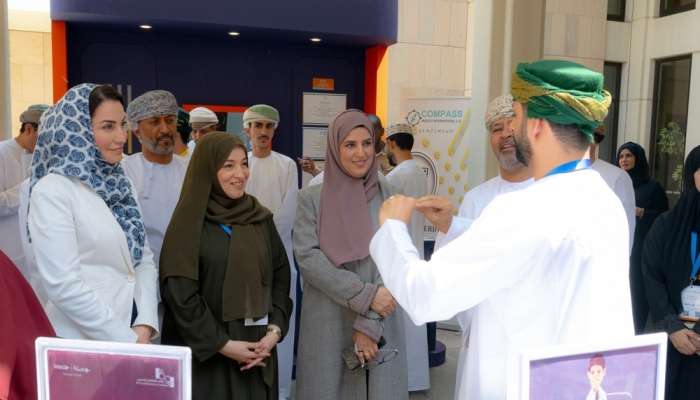
Muscat: Sultan Qaboos University (SQU), in cooperation with the Omani Association for Persons with Hearing Impairment, organized today a forum titled "Towards an Inclusive University: Prospects for Admitting Students with Hearing Disabilities into Higher Education Institutions."
The event was held under the auspices of HH Sayyida Dr. Mona Fahd Al Said, Assistant Vice Chancellor of SQU for International Cooperation.
The forum coincided with Arab Deaf Week, a move that reflects the national commitment to enhancing inclusive education opportunities and consolidating the principles of justice and equal opportunity within higher education institutions.
The forum aimed to raise community and university awareness regarding the right of students with hearing disabilities to enroll in higher education. It provided a scientific and dialogue-based platform bringing together decision-makers, academics, specialists, civil society organizations, and students themselves to discuss the current state of university admission policies, challenges related to accessibility for this category, and a review of the best local and international inclusive educational practices.
Professor Dr. Fakhriya Khalfan Al Yahya'ei, Director of the project for admitting persons with hearing impairment at Sultan Qaboos University, stated that the transition toward an inclusive university is not a choice but rather a national and ethical responsibility that requires the integration of efforts between various institutions.
She added that Sultan Qaboos University began early serious thinking and planning to prepare an inclusive educational environment capable of accommodating students with hearing disabilities and providing academic support tools. She noted that the university has worked on developing curricula to suit their needs and implementing several workshops and training packages to enhance the efficiency of academic and administrative cadres, in addition to preparing buildings, lecture halls, and residential facilities to ensure a suitable and safe educational environment.
She pointed out that, on the academic level, the preparation of a sign language dictionary for academic concepts has been completed and filmed to ensure the proper transmission of specialized knowledge.
Additionally, the plan for a rehabilitative foundation year to develop Arabic language skills has been established, including course descriptions and the development and review of curricula to align with Omani culture by the work team at Sultan Qaboos University. Furthermore, five training packages were implemented, attended by twenty individuals including academics, technicians, and administrators who will interact with the students.
She also highlighted the launch of a voluntary initiative to register volunteers among university employees and students to learn sign language and support the integration process for this category.
More than 100 volunteers registered within a few days, underscoring community awareness of the importance of collaborative work in achieving true inclusion and facilitating the integration of these students into university life. She indicated that work is currently underway to finalize the signing of a memorandum of cooperation with the Omani Association for Persons with Hearing Impairment to intensify sign language learning for university members.
The forum addressed the importance of art education as an effective pathway for empowerment and inclusive education, while also presenting field experiences and inspiring success stories of students with hearing disabilities, reflecting their abilities and potential for academic and social integration.
The forum's program included scientific papers, training workshops, and presentations of pioneering experiences and success stories. It targeted faculty members, administrators, students, and specialists in special education and art education, in addition to civil society institutions, parents, and relevant authorities.
This forum underscores the importance of institutional partnership between universities and civil society organizations, contributing to the development of admission policies, the improvement of support services quality, and the provision of sign language interpreters to achieve a more inclusive university environment for all.